

Looking, Seeing, and Watching: Small Differences, Big Impact
Don't make this common English mistake!

Hello, English Learners!
One of the quickest ways to sound more natural in English isn’t learning bigger words, it’s using common words correctly.
Take these three verbs:
I looked at...
I saw...
I watched...
They all involve your eyes, but they describe three very different actions. Mixing them up is one of the most common mistakes English learners make, and mastering the difference instantly makes your English feel more precise and fluent.
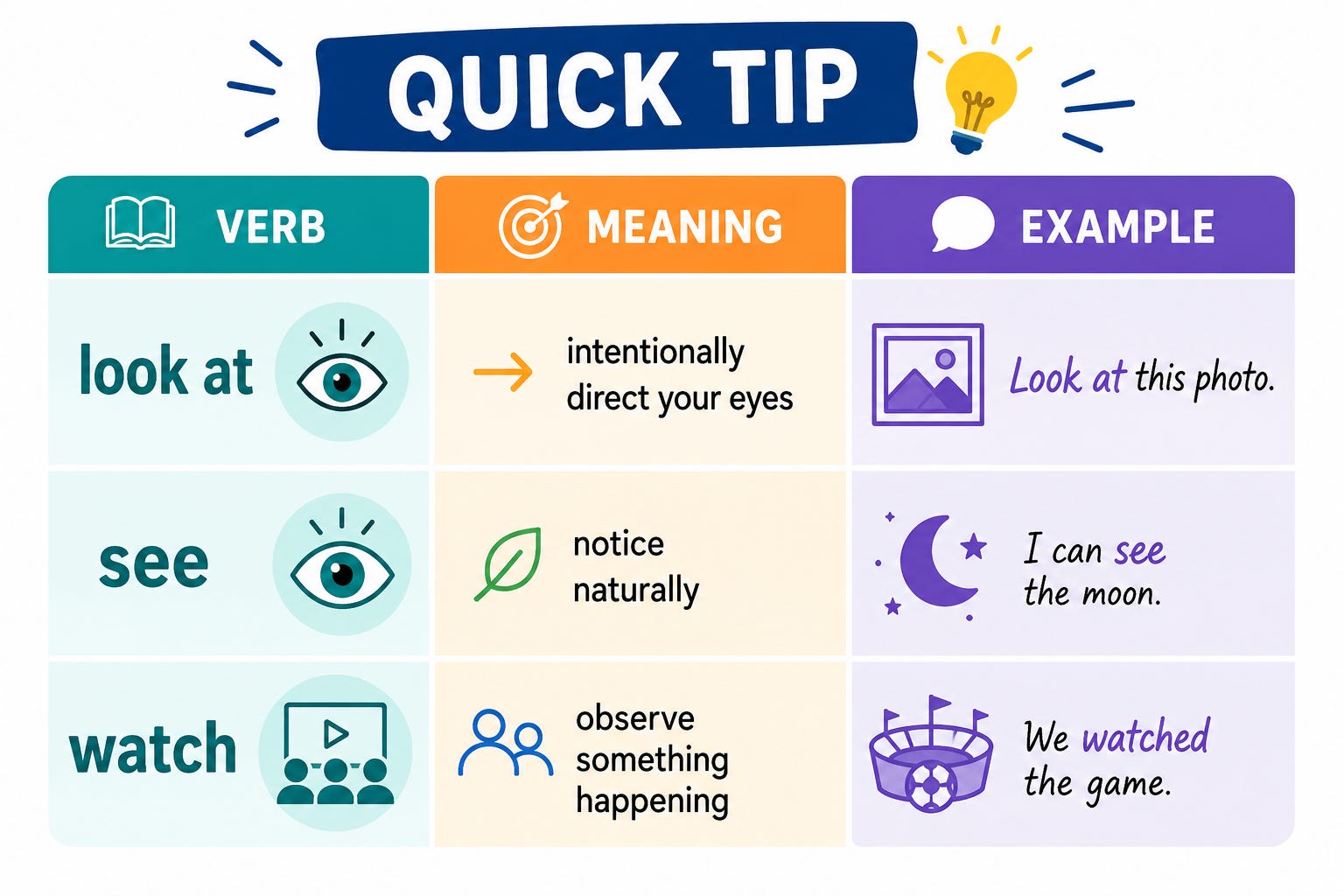
This week’s worksheet is built around those everyday verbs, but as always, we don’t stop there.
We’ll also explore advanced vocabulary you’ll actually hear and use, including words like meticulous, hesitant, touched, and overlook, along with practical phrasal verbs such as look into, look around, and watch out for.
Everything comes together in a story about a museum curator whose interaction with a visitor becomes a reminder that we rarely all see the same thing, even when we’re looking at the same object.
Along the way, you’ll practice:
the difference between look at, see, and watch
seven advanced vocabulary words in context
three useful phrasal verbs
a narrative story and a related dialogue
discussion questions designed to get you speaking naturally and confidently
Sometimes the biggest improvements in English come from paying closer attention to the language that’s right in front of us.
I hope you enjoy this week’s materials.
Speak soon,
